
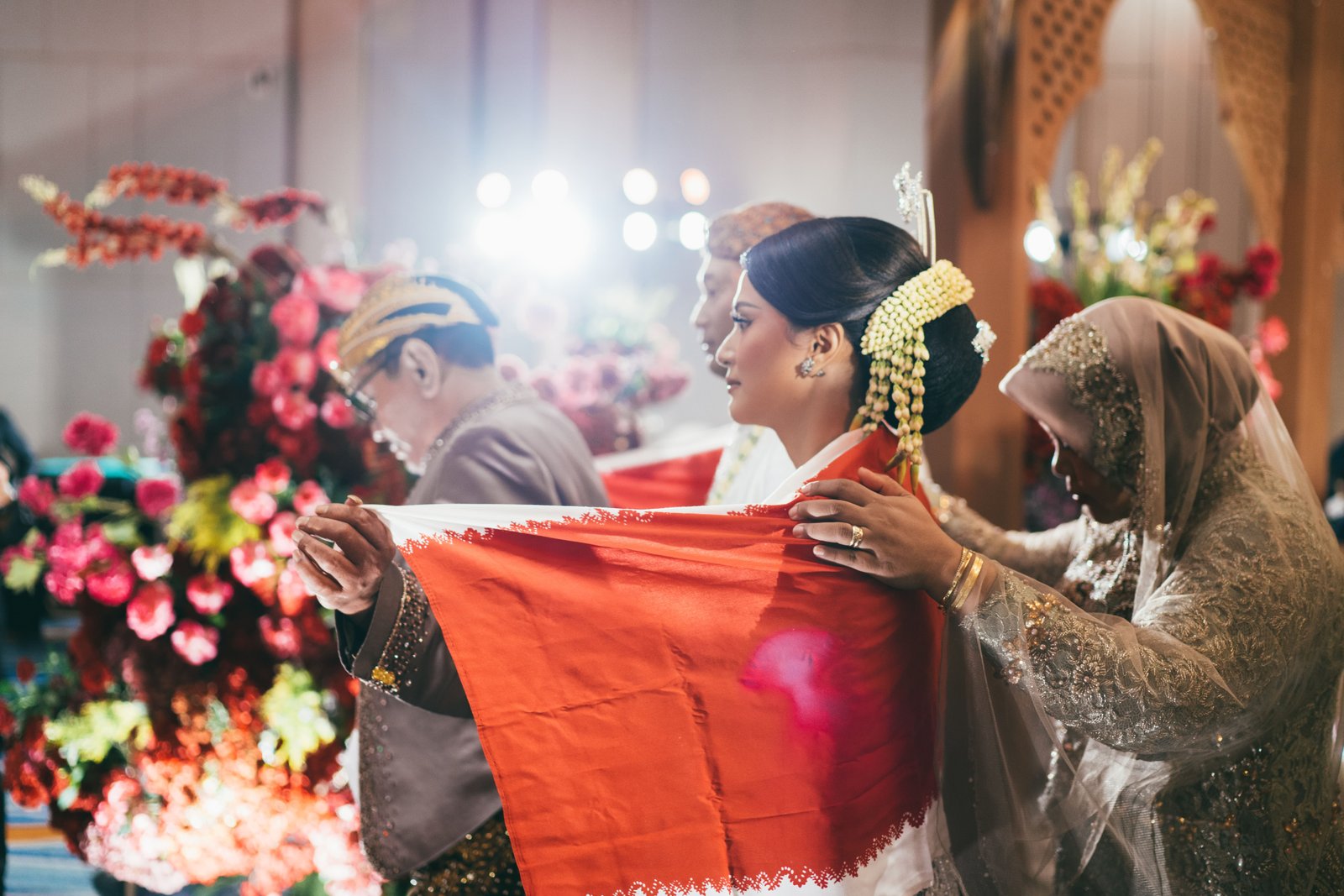
One of the most delicate challenges modern couples face when planning an Indonesian wedding isn’t picking the venue or choosing the catering, but it’s navigating the creative tug-of-war over the photo album.
On one side, you have the couple’s vision: editorial, documentary-style, candid captures that freeze raw emotion in time, a tear falling during the sungkeman, an unscripted laugh between bride and groom, or dynamic movement on the dance floor. On the other side, you have the deeply rooted family expectation: crisp, formal, perfectly posed stage photos (foto pelaminan) with hundreds of extended family members, colleagues, and VIP guests.
For many Indonesian couples, attempting to combine these two contrasting styles feels like a compromise. However, with the right approach, you don’t have to choose between satisfying your parents’ traditions and preserving your personal aesthetic.
Here is how to strategically structure your wedding photography to capture both timeless candid moments and mandatory adat family portraits.
1. Implement a Dual-Team Photography System
The most effective way to guarantee coverage for both styles without creating chaos is assigning dedicated roles within your photography team. Rather than having all photographers float around or all focused on the stage, divide and conquer:
- The Stage Lead: Focused exclusively on formal grouping, family protocol, and ensuring every VIP guest gets a well-lit, sharp portrait on the pelaminan.
- The Documentary Lead: Works untethered from the stage. Their job is to look away from the line of guests and focus on off-stage interactions: parents wiping tears in the front row, kids playing near the decor, or private glances between the newlyweds.
When hiring your wedding photographer, ensure their team operates with this multi-angle workflow rather than a single unified approach.
2. Engineer a Dedicated "Stage Sprint" in Your Rundown
Formal pelaminan photos become stressful when they spill over into the rest of the schedule. Avoid endless, unstructured stage photo sessions by working with your Wedding Organizer (WO) to build a structured "Stage Sprint."
- VIP & Core Family First: Schedule immediate family and primary VIP stage photos immediately after the main ceremony (Akad or Holy Matrimony) or right at the start of the reception before general guest greetings begin.
- Batching System: Have the Event Organizer call up groups using a pre-approved list grouped by family branches or organizations, rather than an open call.
- Time Cap: Allocate a strict 30-to-45-minute window for mandatory stage group photos, leaving the remaining reception time open for the photography team to capture natural interactions.
3. Capture Candid Magic Within the Stage Protocol
Formal stage photos don't have to look stiff or lifeless. An experienced wedding photojournalist knows how to extract candid moments from formal setups:
- In-Between Frames: The moments right before a formal pose settles; a grandmother adjusting the bride's suntiang or an uncle telling a joke while stepping up to the pelaminan, often yield the warmest smiles.
- Side-Angle Shooting: While the main stage photographer takes the direct, frontal flash photo, a second shooter stationed at a 45-degree angle can capture authentic profiles, handholds, and micro-expressions that the frontal shot misses.
2. Align Your Presets and Color Editing Early
A major reason couples worry about stage photos ruining their aesthetic vision is the drastic difference in editing. Stage photos often require heavy artificial lighting to cut through dark venue backgrounds, while candid shots lean on natural or ambient light.
Communicate with your media team during pre-production to establish a cohesive editing profile:
| Photo Type | Lighting Approach | Editing Focus |
|---|---|---|
| Formal Stage (Pelaminan) | Structured off-camera flash for crisp details | Clean, true-to-life skin tones and balanced colors |
| Candid & Storytelling | Ambient/Available light enhancement | Moody, warm, or film-inspired color grading |
Ask your studio to apply a unified color balance across the entire gallery so that transitioning from a formal group shot to a candid reception moment feels like part of the same visual narrative.
5. Educate Family and VIPs Pre-Event
Family members demanding traditional stage photos usually just want to feel included and honored. You can manage expectations early by:
- Sharing a concise "Family Photo List" with both sets of parents weeks before the wedding so they know exactly when their turn on stage will be.
- Letting key family members know that outside of their designated stage slot, photographers will be moving freely to document the day naturally.
Harmonizing Legacy and Artistry
Your wedding photo album doesn't need to be split into two different worlds. Traditional adat stage photos honor your family’s legacy, respect cultural protocols, and document your lineage. Candid photos preserve how the day actually felt.
By establishing a clear shot list, delegating team roles, and setting a structured timeline, you can give your family the heirloom family portraits they cherish while walking away with an editorial, emotion-filled gallery that tells your unique story.
Ready to Harmonize Legacy and Artistry on Your Big Day?
Let's plan a seamless wedding photography experience that honors tradition while preserving your candid moments.
Book Your Wedding Photography