
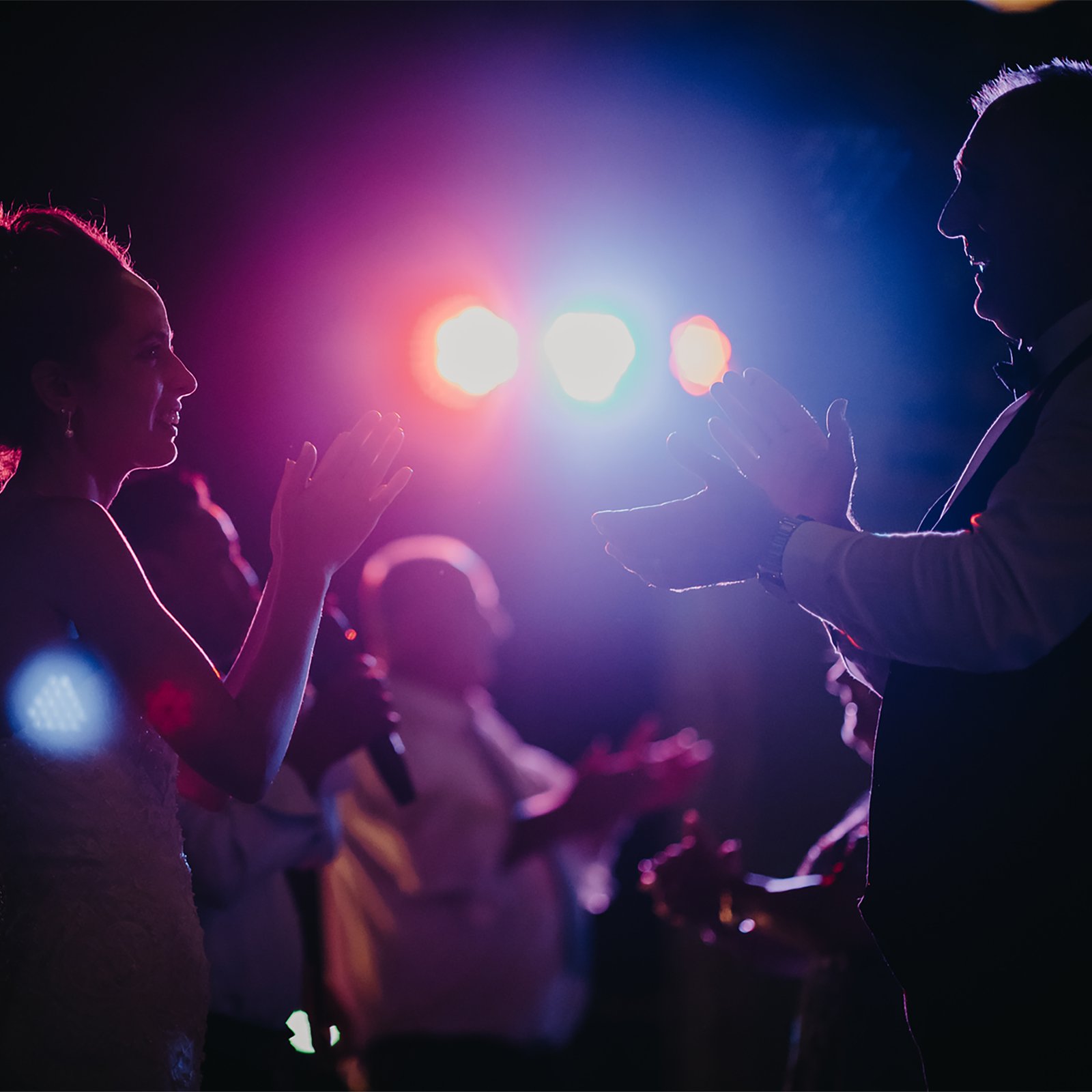
Nighttime wedding receptions and evening outdoor celebrations offer an undeniably romantic atmosphere. Fairy lights, glowing candles, and dark starry backdrops create a magical mood. However, photographing a wedding after dark is one of the most technically demanding challenges a media team can face.
Without proper lighting management, nighttime images can easily suffer from muddy skin tones, pitch-black void backgrounds, or harsh, unnatural flash shadows. Mastering night-time wedding coverage requires a delicate balance between artificial lighting design and harvesting ambient atmosphere.
1. The Core Secret: Dragging the Shutter for Ambient Balance
The most common mistake in evening photography is relying solely on direct camera flash. This overexposes foreground subjects while turning the venue background into complete darkness.
To retain the romantic glow of venue lights, photographers utilize a technique known as "dragging the shutter." By lowering the shutter speed (typically between 1/30s and 1/80s) while using a quick burst of off-camera flash, the camera sensor absorbs the warm background ambient light while the flash freezes the couple sharply in place.
Technical Tip: Match your flash color temperature using CTO (Color Temperature Orange) gels so your flash output harmonizes naturally with warm tungsten fairy lights.
2. Multi-Point Off-Camera Flash Setups
For outdoor night receptions or expansive dark ballrooms, a single flash mounted on top of the camera is insufficient. Professional coverage relies on a multi-light setup:
- Key Light (Main Light): Placed 45 degrees relative to the couple, fitted with a softbox or diffuser to create soft, flattering facial contours.
- Rim/Hair Light (Backlight): Positioned behind the couple aimed toward their backs. This creates a striking light rim around hair and shoulders, separating them clearly from dark backgrounds.
- Ambient Fill Light: Placed in far corners to gently illuminate venue decor, floral arches, or architectural details.
3. Camera Settings Matrix for Night Sequences
| Event Phase | Recommended ISO | Aperture | Shutter Speed | Lighting Technique |
|---|---|---|---|---|
| Evening Vow Exchange | ISO 1600 - 3200 | f/1.8 - f/2.8 | 1/125s | Constant LED Panels + Ambient Light |
| First Dance | ISO 800 - 1600 | f/2.8 | 1/60s - 1/100s | Dual Off-Camera Strobes (Key + Rim) |
| Sparkler Exit | ISO 1600 - 3200 | f/2.0 - f/2.8 | 1/160s | Ambient Sparkler Light + On-Camera Fill Flash (-2 EV) |
4. Executing an Iconic Sparkler Exit Shot
The sparkler exit is a quintessential nighttime wedding climax. To execute this shot flawlessly, clear coordination between your photographer and venue coordinator is essential.
Instruct guests to hold sparklers at a 45-degree angle rather than directly toward the couple's faces. Have the couple walk slowly, pausing halfway down the pathway for a kiss or dip. This allows the camera team to capture multiple dynamic frames while sparklers burn brightly.
Planning an Evening Wedding Reception?
Our photography team specializes in low-light mastery and dramatic night portraiture.
Consult Our Technical Team